
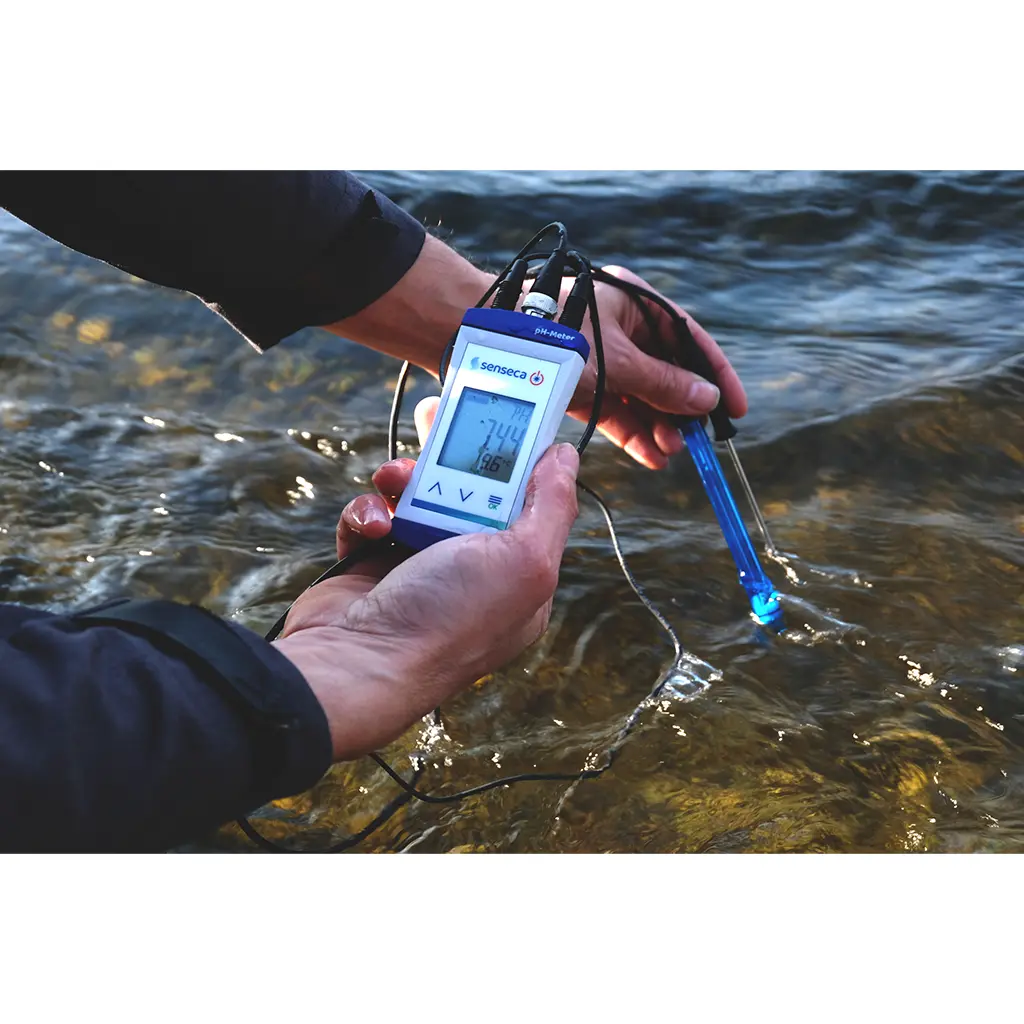
7 Practical Tips for Accurate pH Measurement
pH measurement sounds straightforward — dip a probe, read the number. In practice, there are plenty of ways to get it wrong. Here are some field-tested tips to get reliable, repeatable results.
Calibrate Properly — and Often
A pH meter is only as good as its last calibration. Use at least a two-point calibration with buffers that bracket your expected measurement range. If you're measuring around neutral, pH 4 and pH 7 buffers work well. For alkaline processes, use pH 7 and pH 10. Fresh buffer solutions matter — old or contaminated buffers are a common source of error that's easy to overlook.
Calibrate at the temperature you'll be measuring, or use a meter with automatic temperature compensation (ATC). pH is strongly temperature-dependent; a 10°C shift can move your reading by 0.2 pH units or more depending on the solution.
Keep the Electrode in Good Condition
The glass bulb of a pH electrode needs to stay hydrated. Store it in storage solution (not distilled water — that actually leaches ions from the glass and degrades sensitivity). Between measurements, keep the probe tip moist.
Inspect the electrode regularly:
- Cracks or chips to the glass bulb mean replacement
- A sluggish or drifting response often means a dirty or fouled electrode
- Reference junction blockage (the small porous frit) causes erratic readings and is a frequent culprit in process applications
Clean electrodes with a mild detergent or dedicated electrode cleaning solution, then re-calibrate before use.
Account for Sample Conditions
A few conditions that catch people out:
- Low ionic strength solutions (such as pure water or very dilute samples) give unstable, noisy readings. Add a small amount of ionic strength adjustment solution (ISA) to stabilise.
- High-temperature samples — measure at process temperature if possible, or account for the temperature differential.
- Coloured or turbid samples don't affect pH measurement directly, but can foul the electrode junction over time.
- Samples with high solids content — rinse the electrode between readings to avoid cross-contamination.
Response Time and Equilibration
Give the electrode time to stabilise before recording a reading. In stable, well-buffered solutions this might be 30 seconds. In low-conductivity or unusual matrices, it can take several minutes. Impatience is one of the most common causes of inaccurate results.
If you're doing continuous or inline measurement, ensure adequate flow past the sensor — stagnant conditions near the electrode cause localised pH shifts.
Check Your Reference Junction
The reference junction (the small ceramic frit or sleeve at the bottom of a combination electrode) is the most failure-prone part of a pH electrode. It needs a clear, low-resistance electrolyte path to the sample. Signs of a blocked junction include:
- Readings that are slow to stabilise
- Calibration that looks fine but measurements in samples are inconsistent
- A large offset between expected and measured values
In process environments, pressurised reference electrodes help prevent sample ingress into the junction.
Record Calibration Data
Keep a log of calibration slope and offset. The slope (ideally close to 59.2 mV/pH at 25°C) tells you how healthy the electrode is. A slope below 85% of theoretical is a warning sign; below 80%, replace the electrode. Tracking this over time gives you advance warning before measurements go off-track.
Choose the Right Electrode for the Application
Standard glass electrodes work well for most aqueous solutions. But there are specific situations requiring different electrode types:
- HF or fluoride-containing samples — use a plastic-body or non-glass electrode
- High-temperature, high-pressure processes — ensure the electrode is rated appropriately
- Food and beverage or semi-solid samples — flat-surface or spear-tip electrodes are more practical
- Low-maintenance process installations — consider gel-filled electrodes that reduce junction maintenance
Summary
Most pH measurement errors come down to a handful of things: poor calibration practice, a degraded electrode, not accounting for temperature, and not allowing enough equilibration time. Address those and your measurements will be solid.
If you're selecting pH equipment for a process application or need advice on the right electrode type for a specific duty, get in touch with us — we're happy to help.
Want more practical tips on industrial measurement and control? Check out our range of pH measurement products.